
The Johnsons
The Thomas Johnson Family of Swansonville
1893 – 1949 and Beyond
Written by Karen Choyce (born 1960), daughter of Betty, granddaughter of Ellen.
I think of my Thomas Johnson Family as strands of yarn from many places — different and afar — woven together into a family blanket, bit by bit, year by generation. A family, over time and from various places, weaving and writing its history. There are many pieces of yarn, stretching from person to place, woven into a cozy family keepsake. This required much effort, sacrifice, decisions, mistakes, and hard work — from northern Europe to the new state of Washington.
The quilt is complicated and, at times, frayed or unraveled. But I am here, wrapped in it.
— Karen (Knutsen, Jensen, Johnson, Jones, Choyce)
Thomas Johnson — Norway
Born: April 11, 1862 | Died: May 8, 1934 | Buried at Forest Hill
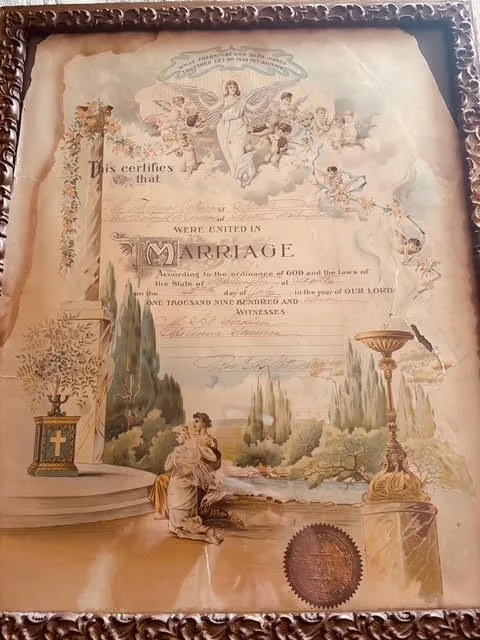
Tom Johnson marriage certificate Seattle 1911
Tom worked in the sawmills and forests of Norway, readying for his journey to the great Northwest. Our first glimpse of him in Washington is this 1893 deposit slip at Port Ludlow for $175.00 guaranteed in "United States Gold Coin." He arrived in the USA in 1886 at age 24 — before Washington statehood.
He originally worked at the Hadlock Mill (the location of the alcohol plant) before moving to Swansonville to work in the bigger mill at Ludlow. He became a millwright and, per his duties, was known to have the first car and phone in Swansonville. His neighbor, Len Klockers (born 1922), remembered seeing that "big machine" and hearing the phone — a piece of modern magic in that time.

Tom driving, with wife Betsy and her mother, Frederikke
Leonard Klockers — then a 13-year-old boy — would dig the grave for his neighbor Tom, earning $2.50 for that chore in 1934. Tom's funeral was held at the Swansonville church, as was his wife's, 20 years later.
Betsy V. Jensen — Greenland & Denmark
Born: May 26, 1875 | Died: May 19, 1955 | Buried at Forest Hill
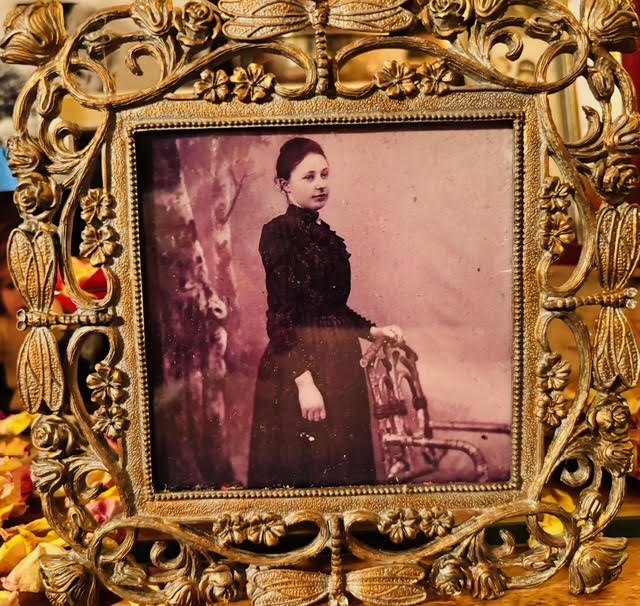

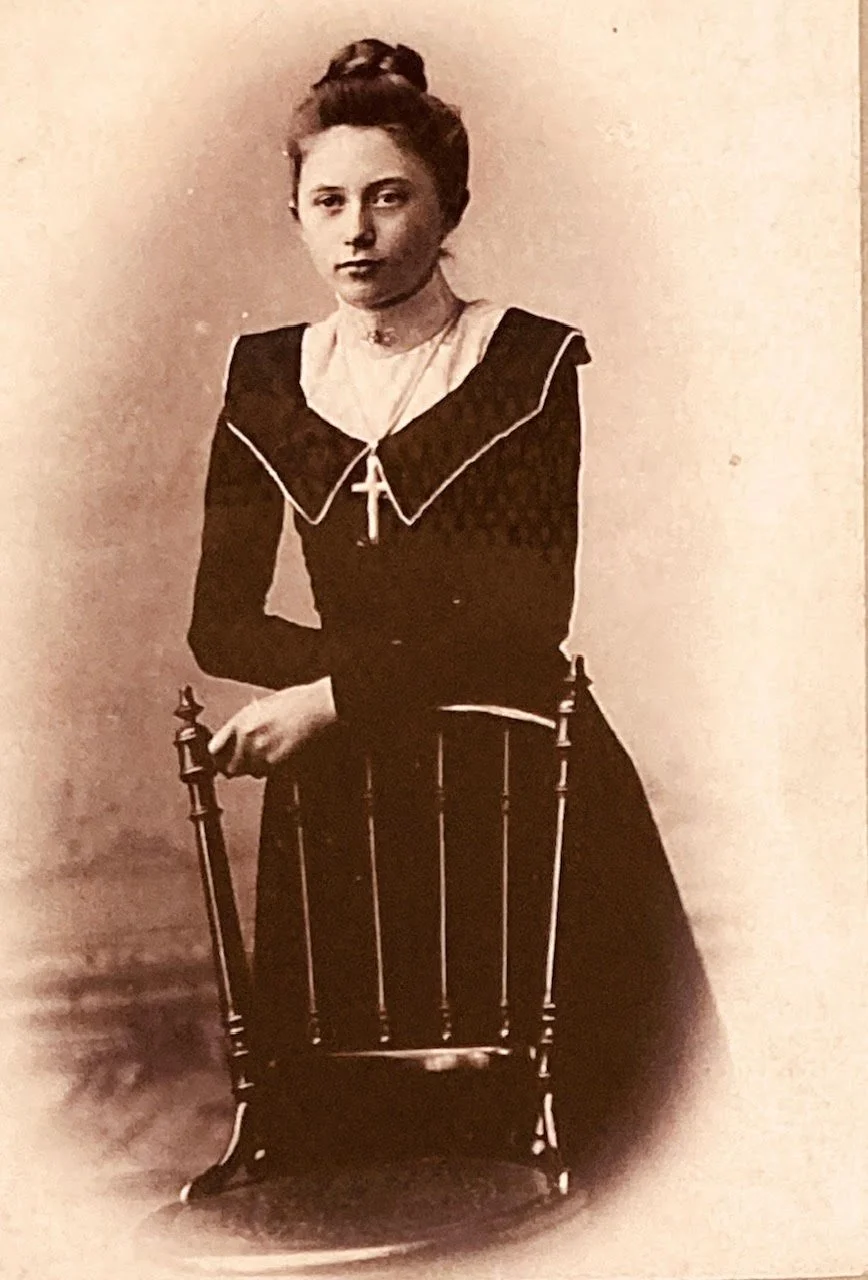
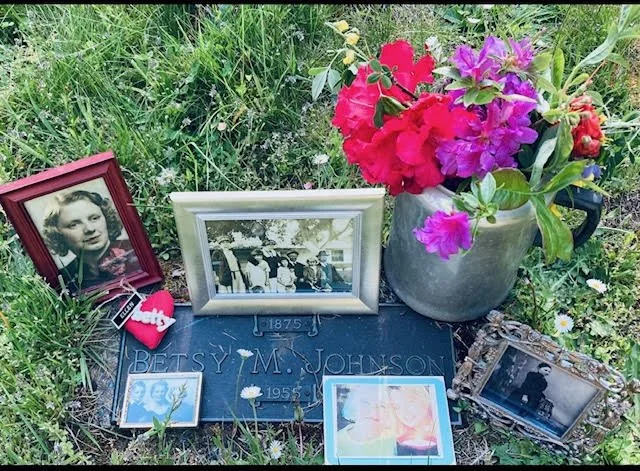
Betsy was born and grew up at 72 degrees north latitude in Upernavik, Greenland — a territory of Denmark. (This latitude is the furthest north any Viking evidence has ever been found.)
Both her parents were from southern islands of Denmark and moved to a Greenland whaling and sealing village as Danish pioneers in the 1850s.
After Betsy's father, Peder Jensen, died in 1894, her mother and four siblings returned to Rudkøbing, Langeland, Denmark before immigrating to Washington state. A sister, Dagmar, and her husband came first and made way for the rest of the family to follow in 1907, coming to Shine and Swansonville.
From Norway's forested lumber mills and Greenland's whaling port, two people were poised to meet where farms met the forest and the sea — across the world, in Ludlow and Swansonville.
Frederikke Knutsen Jensen — The Matriarch
Born: 1853, Langeland, Denmark | Died: 1940, Bremerton, WA
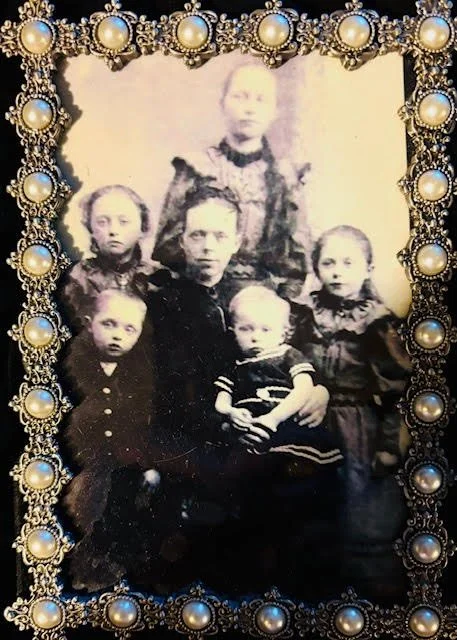
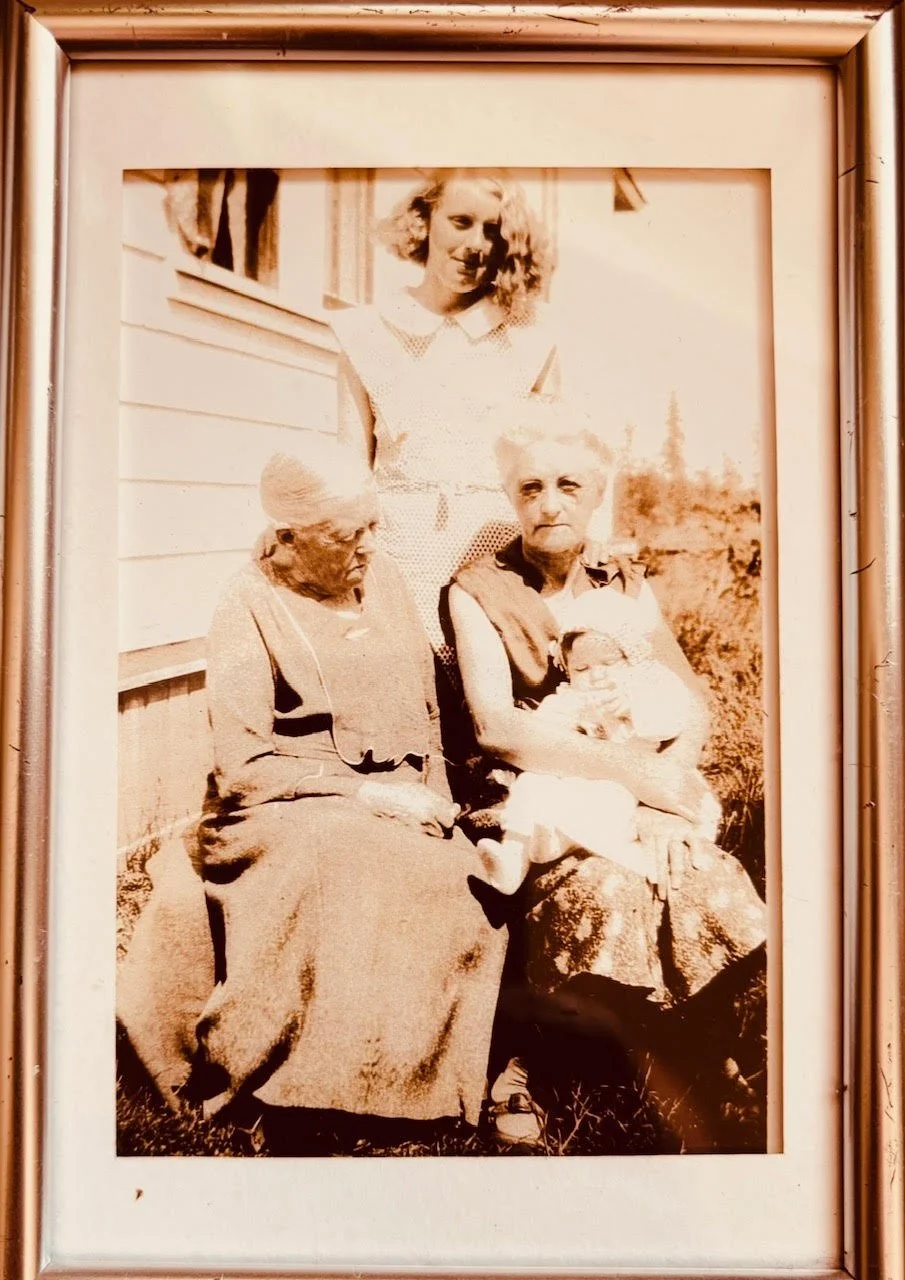
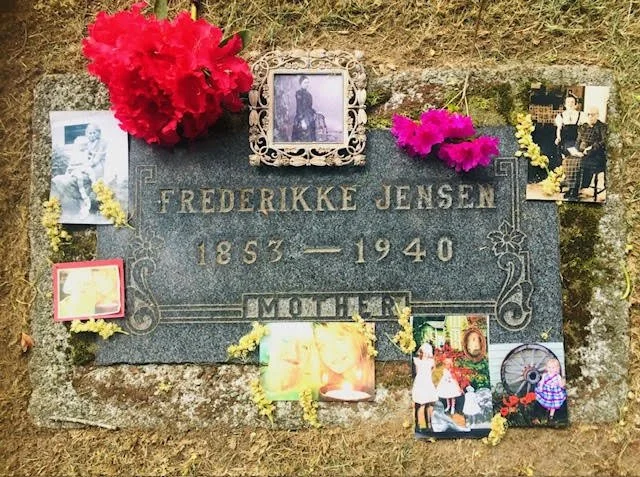
Frederikke was the matriarch of this Danish-Greenland family. She immigrated to Washington with her children: Betsy and a son, Fritz, raised in Greenland.
Her first decades were spent in Swansonville with her daughter Betsy. Later, she often visited when she had granddaughter Ellen and her great-grandchildren.
For this family, the rain and mild winter of Washington were a much easier climate than the frigid cold and snow of Greenland.
Note: Frederikke's husband, Peder Jensen, was a whaler, sealer, hunter, and dog-sledder in Greenland. Because of his experience and skills with English, Danish, and Inuit languages, he was recruited by a Boston polar exploration conducted by Dr. Isaac Hayes. This expedition is chronicled in the book The Open Polar Sea and occurred from 1860–1861 on the schooner United States. This merely illustrates the tough stock from which his wife and children were formed.
We laugh that Swansonville must have seemed "balmy" for these Greenlandic Danes.
A Norwegian and a Dane Meet in Swansonville

Stumps, wet terrain, and hard work in early Swansonville, circa 1912. Betsy dressed in pristine white despite this muddy world.
Many events, ideas, and years would pass before a young man in Norway made his way to the lumber and timber country of Port Ludlow. Over 10 years later, a young woman, also of Scandinavian heritage, would come to Swansonville and meet this Norwegian man.
Thomas Johnson and Betsy V. Jensen were married on July 29, 1911, by a Lutheran minister in Seattle.
Tom worked at the Ludlow Mill. Betsy was a hardworking housewife, tending to chickens, eggs, and a dairy cow for family needs. Any surplus was sold, down Swansonville Road, to the ever-hungry mill.
Betsy is mentioned in Betty MacDonald's book, The Egg and I, always dressed so nicely despite difficult and dirty farm work.
They had the farm directly behind the Klockers, turning left at the church and winding behind. As Scandinavian/Nordic people, they all socialized and found a shared community in Swansonville. As young widows, both Mrs. Klockers and Betsy Johnson found friendship and companionship on adjacent farms.
Ellen "Tom" Johnson
Born: January 17, 1914 | Died: June 10, 1978
Tom and Betsy had only one daughter, Ellen Tom Johnson — known with this middle name to distinguish her from the other Johnsons in the area. As recently as 2015, a local, elderly friend, Ethel Johnson, still called her this, a testament to their lives growing up in Swansonville's Scandinavian culture.
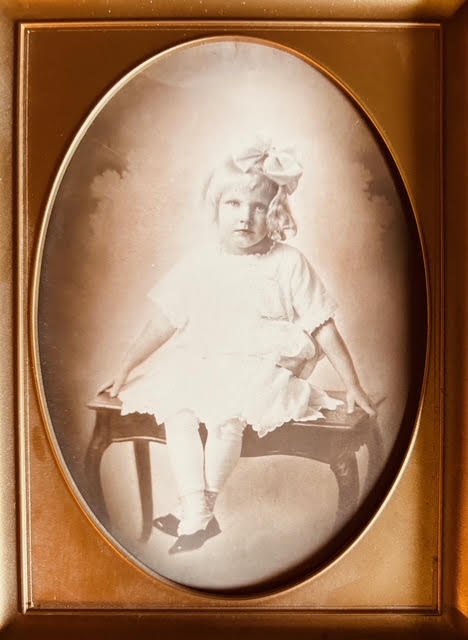
Ellen “Tom” Johnson
The first part of her elementary years, Ellen could not attend school. She did not speak enough English, being raised by a Danish mother and Norwegian father. With the Swedish-speaking Finns of the Klockers, most of the Nordic countries were represented by their similar cultures in this area.
Ellen grew up as an only child with her best friend, Betta McGuire. (Betta is buried at Forest Hill, top and center, with a stone that says "she and her 10 infant children." She and her husband had Rh factor incompatibility and lost all their children in childbirth.) My mom, Betty, was named in part after Betta and her losses.
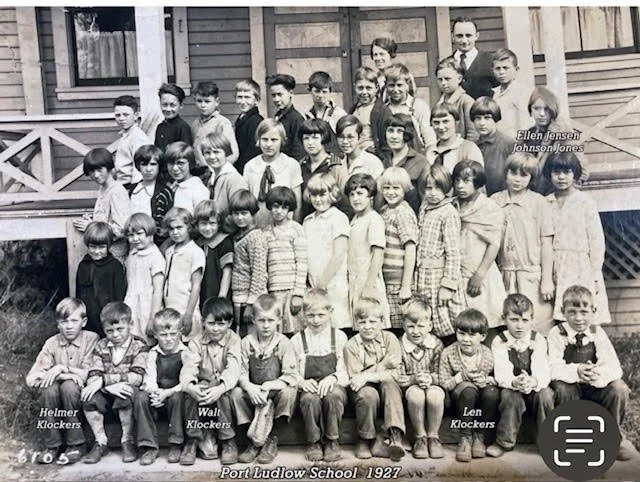
Ludlow School, circa 1927
After school, kids would visit the store and ferry, watch the mill-workers and hotel guests, play along the water and on the dock, enjoying all the hub-bub of a thriving mill town. Life was hard but stable with a prosperous mill in the roaring 1920s. Life was good for the enclave of rural families that supplied the mill with farm goods or were direct employees.
Swansonville itself had the church as a hub, with Sunday services and Sunday school.
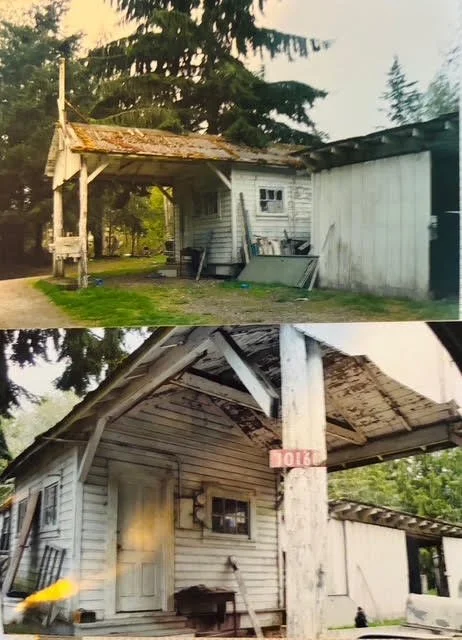
Ludlow gas station and store, at Ludlow creek
There was a school bus stop at Ludlow gas station and store at Ludlow Creek when kids went to Chimacum for high school. It is still there — a shred of memories and bygone busyness, candy, school buses, and activity, filled with kids and customers in that time. It is sadly silent now.
William N. Jones — Georgia
Swansonville was about to get a bit more interesting when a couple of Camp Lewis soldiers arrived after discharge, looking for work, post-WWI in the 1920s.
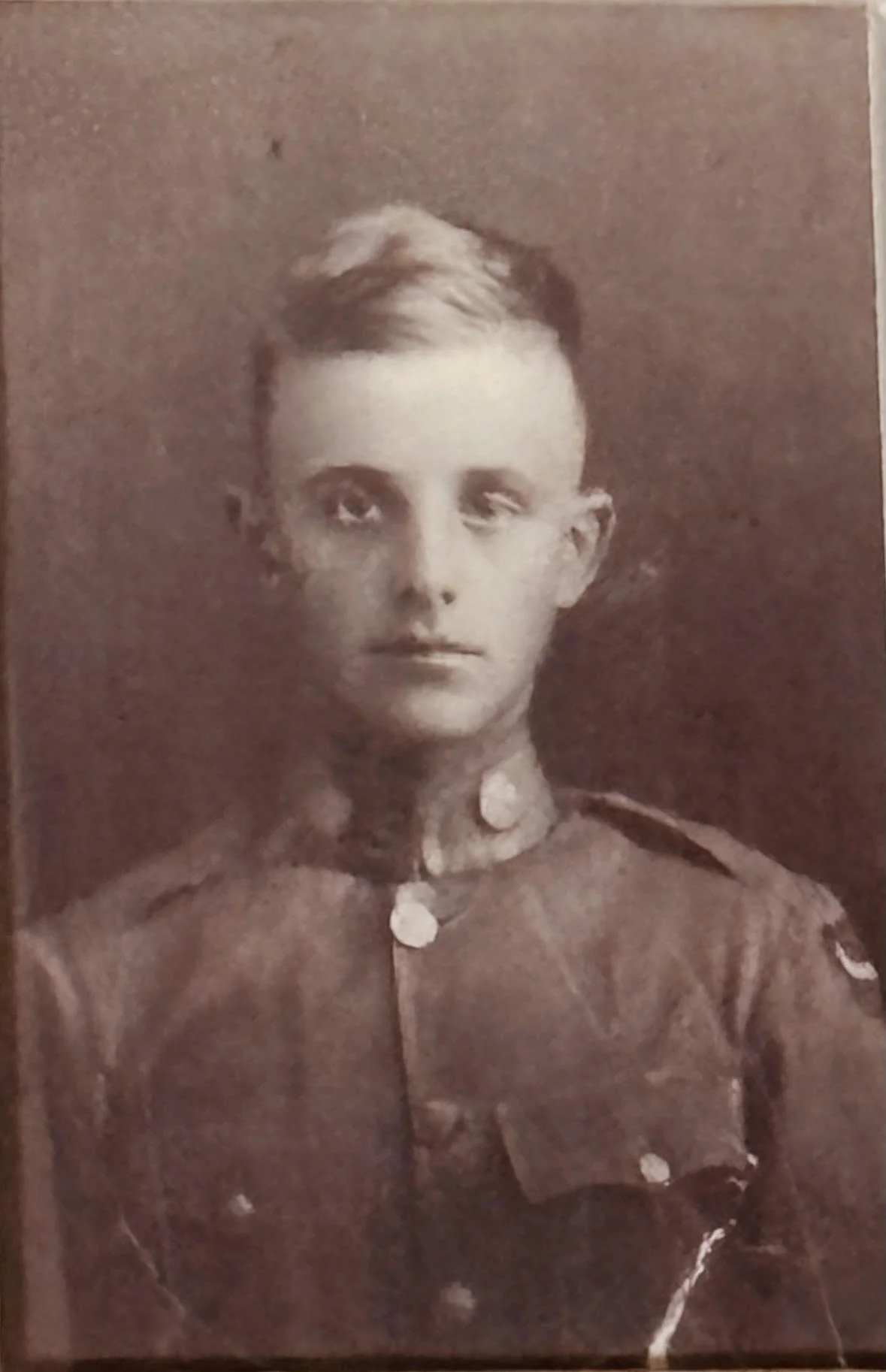
William N. Jones
William N. Jones of Georgia was a new, slick strand of yarn about to be woven into the family story. He was tall, handsome, a smooth talker with a deep, charming Southern accent.
He spent his young life as part of a big Georgia sharecropping family, picking cotton in the hot and humid Southern sun. Hard work was part of his rearing, but he found the climate of the lumber mill a much better workplace than his home state. He spent time in the Pacific as a post-war soldier. He and his friend stayed in Ludlow.
One day on the docks, he met a tall, blonde Danish girl named Ellen "Tom" Johnson — and soon she became Ellen Johnson Jones. They moved in with her folks behind the Klockers.
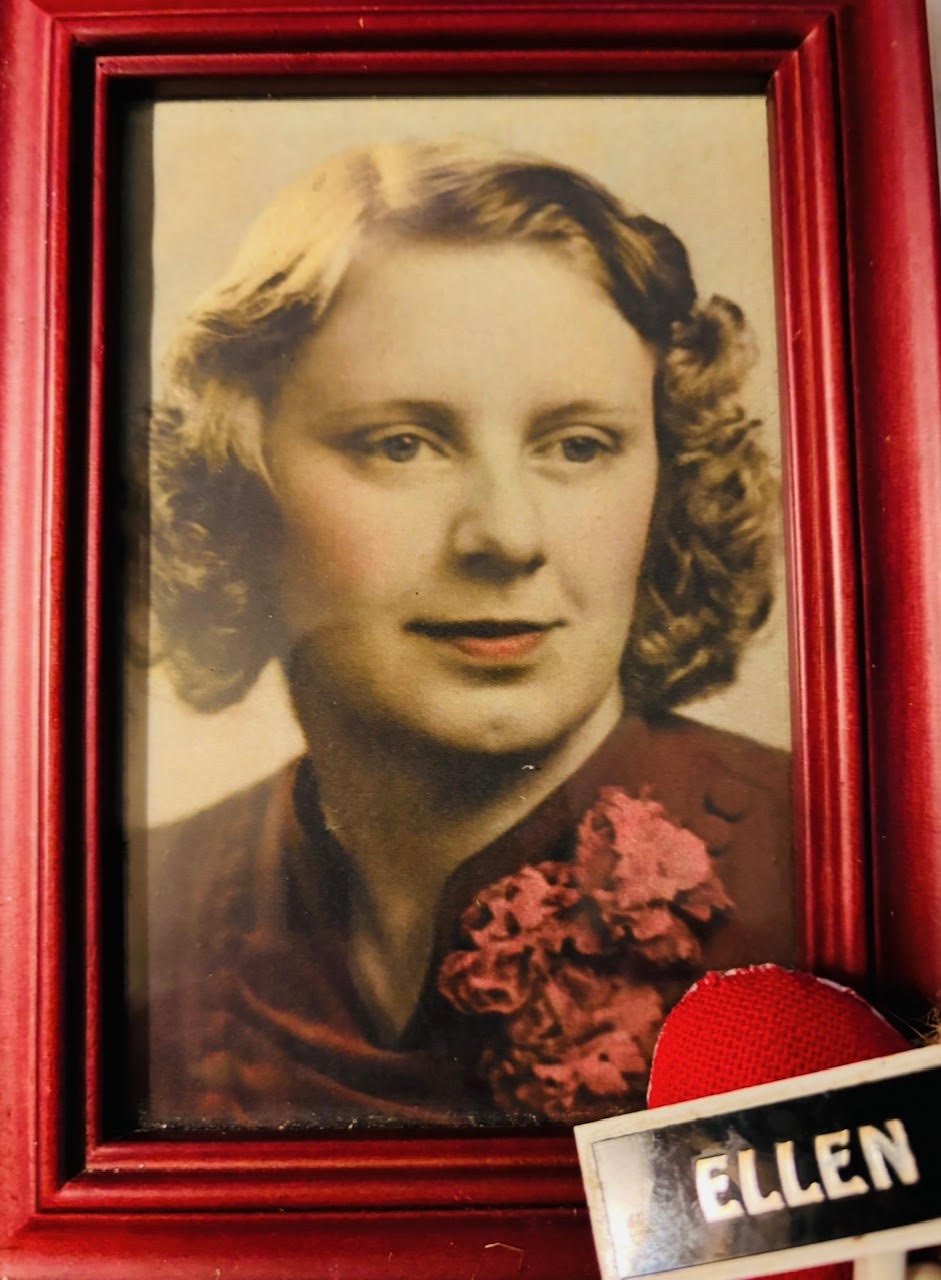
Ellen Johnson portrait.
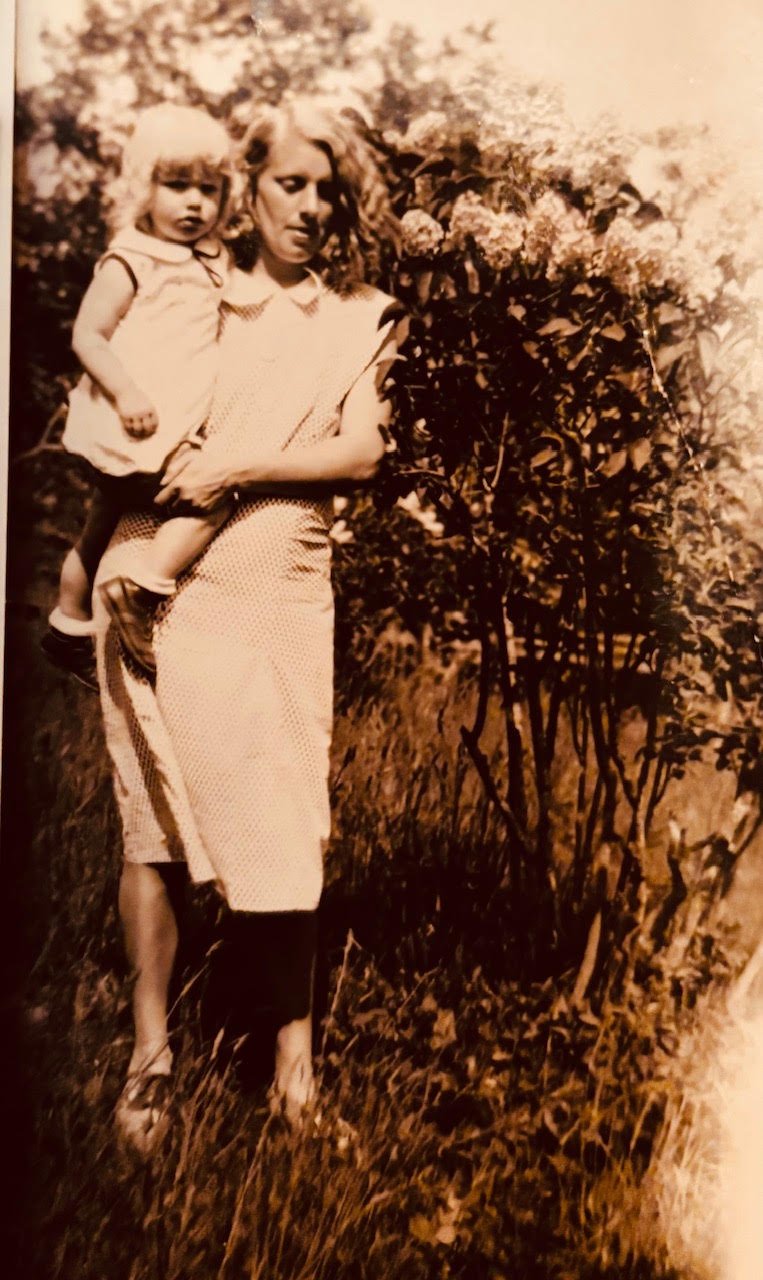
Ellen and Betty in Swansonville, 1933.
From Georgia and Greenland, these people had three things in common: a preference for the more moderate climate of the Northwest, the beginning letter "G" of their homelands, and the ability to endure hard work in a rough environment. They were well-suited for Swansonville.
Within a year, Ellen and Will would have a son, Don "Sonny" Jones, and later my mother, Betty V. Jones, born on the 4th of July, 1931, in Port Townsend Hospital, returning to Swansonville. Another daughter would arrive in 1933.
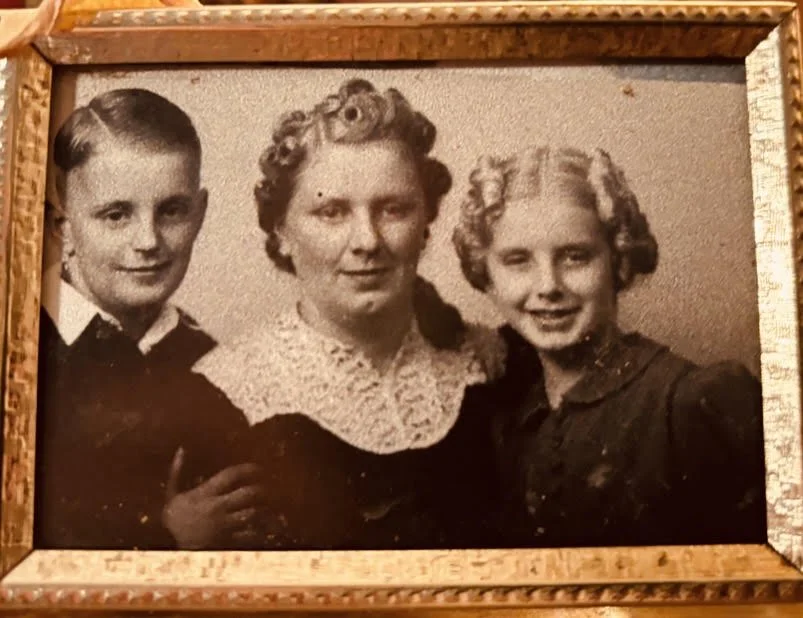
Ellen with Sonny and Betty, 1939
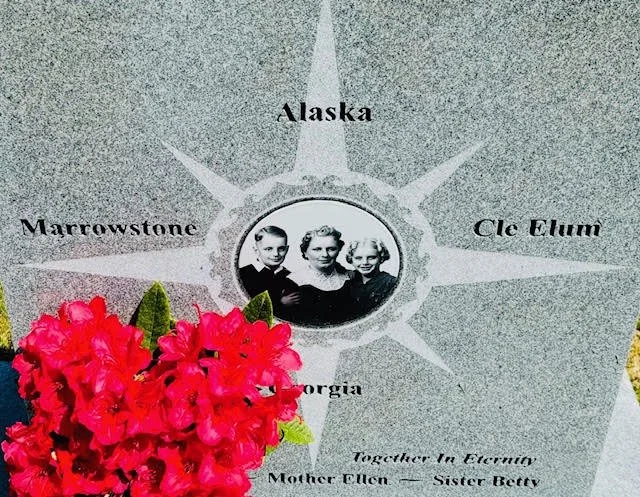
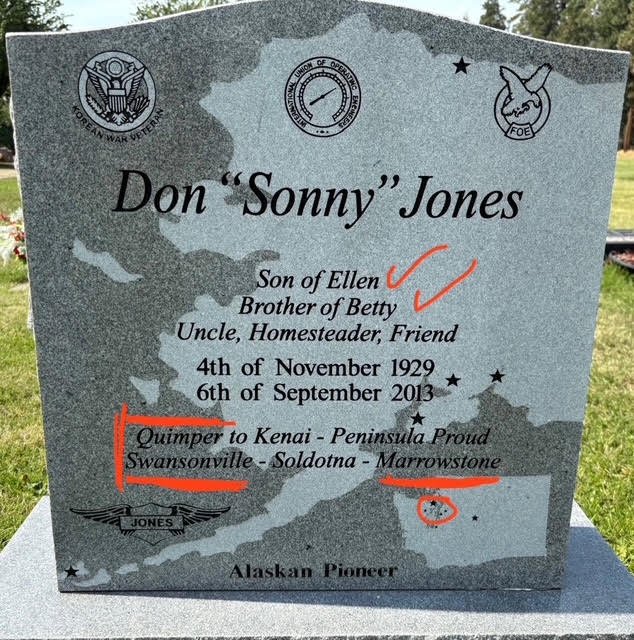
Same photo on Sonny's headstone. He passed in 2013.
Betty V. Jones was named for Betta McGuire and Betsy V. Jensen Johnson — a nod to Ellen's dear friend and mother.
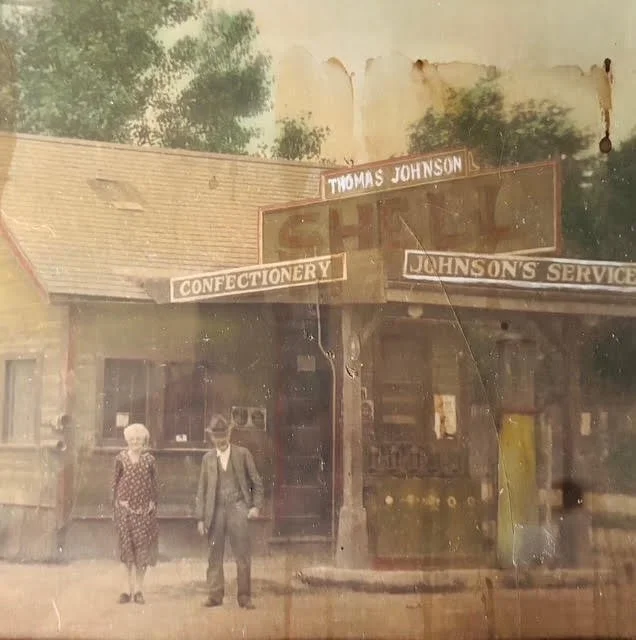
The Johnson Service Station & Confectionery
The young family now lived in the family home as Tom and Betsy, in his retirement, had moved to another mill town, Woodinville, WA.
They started The Johnson Service Station and Confectionery.
Sadly, within a few years, Tom unexpectedly passed. Betsy returned to Swansonville, where Tom was buried. She lived with her daughter Ellen and family again, right behind the Klockers. The strands of yarn started pulling people back.
The Depression Years and Alaska
Through the Depression, Ellen, Will, and their kids would attempt a life of independence in the Seattle area. At each attempt, they financially failed and found their way back to the security of Swansonville. They lived in Tacoma, Seattle, West Seattle, and Ballard, but each time they ended back "home." Strands of yarn were working and weaving again.
Due to the Depression, Will decided to go north to Alaska when the Homestead Act was active. He homesteaded 160 acres in suburban Anchorage. Sonny joined him at times, attending school with his sister Betty at Port Ludlow or Chimacum. They were living with their mom and grandmother at the Swansonville house.
The Alaska separation brought an end to Ellen and Will's marriage, as Ellen refused to leave comfy Swansonville for the wilds of Alaska. The yarn held her snugly to her home and would not reach any further north.
Edgar Askham — England
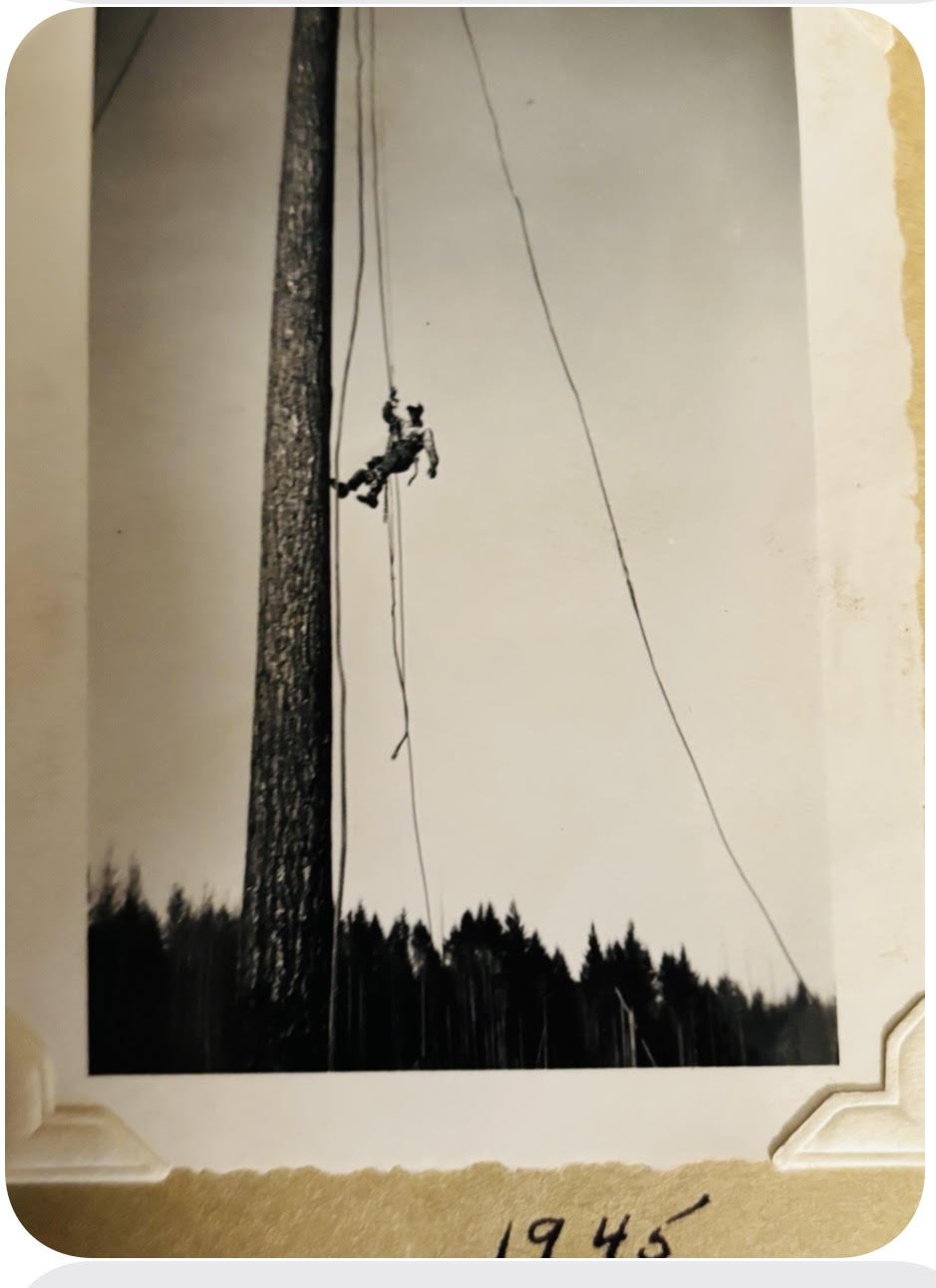
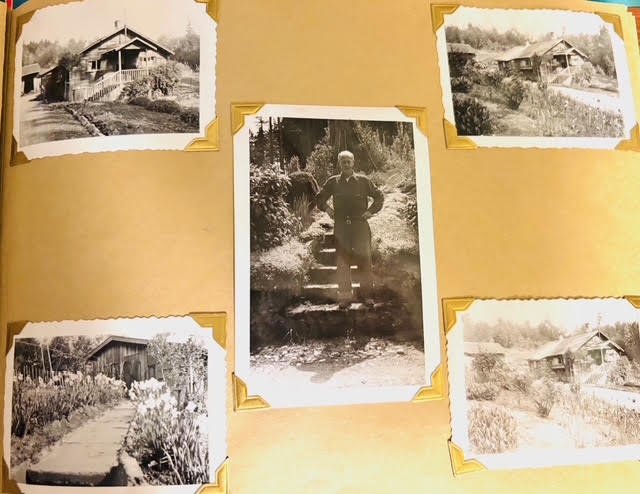
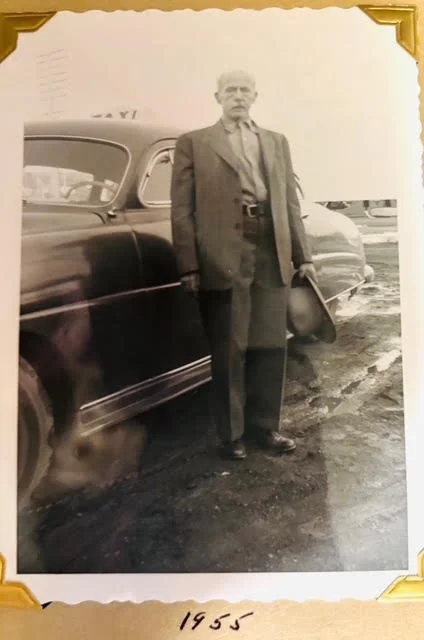
During those years, Ellen began dating a man who had come to log for cedar with his uncle, a bachelor from England: Edgar Askham. A few strands of hardy English wool had come to the knitting needles.
Edgar immigrated from England after tragically losing his wife and child in childbirth. He was delighted with Ellen's children and a sense of family, finding great happiness in them.
Edgar's tidy home and garden were on the hill above Ludlow gas station and store. It is all gone now, as if it was never there — although so very much happened in that place.
Fred Gaskell — Cle Elum
Ellen eventually married Fred Gaskell in 1947 and moved to Cle Elum. Betsy moved with them.
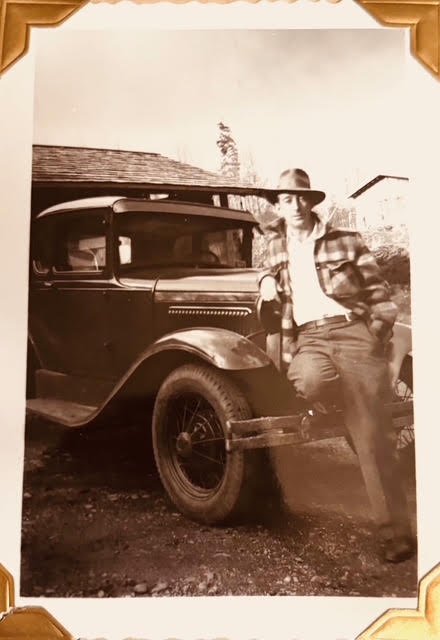
Fred Gaskell
Fred and Edgar had lived in Roslyn and Cle Elum. Fred's piece of yarn would pull the family away from Swansonville — but not forever. It always pulls us back.
Some years after Betsy's passing, the vacant Swansonville farmhouse had a fire, and their sense of home was fully lost. Embers of memories smoldered and still survived.
Betty V. Jones — The Fulcrum
Born: July 4, 1931 | Died: 2009
Betty graduated from Chimacum High School in 1949.
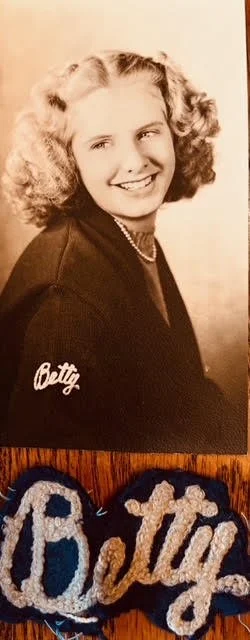
Betty’s graduation photo from 1949.
After graduation, Betty followed the family to Cle Elum, leaving her classmates, friends, and Swansonville behind — for now.
Edgar, as an elderly man, moved with "his family" to Cle Elum for his final years. His strands were becoming shorter, too.
Betty attended college at Central Washington State College of Education, becoming an elementary teacher in Cle Elum for 36 years. During college, she dated her Cle Elum milkshake man — my future dear dad — and they married in 1954, raising their two children in his multi-generational Cle Elum. (It was his own Swansonville.)
My strands were fully interwoven into two true and historic hometowns.
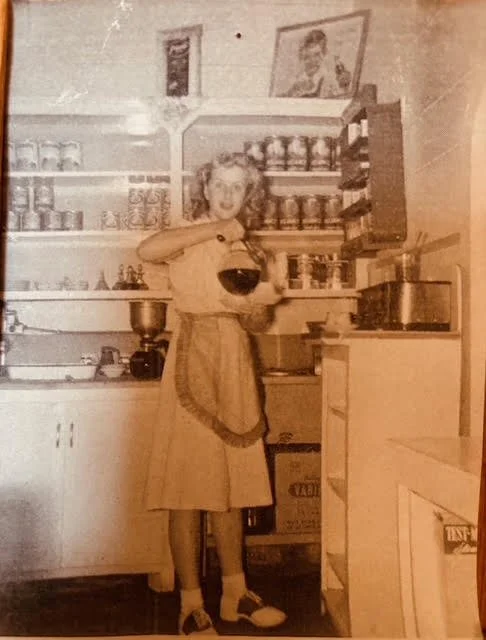
Betty at The Sunset Cafe in Cle Elum
Coming Full Circle
When Betty retired (recently divorced), she came back to Ludlow, Chimacum, and Swansonville. She reconnected with friends, classmates, and even an old high school boyfriend. She bought a second home on the sunrise side of Marrowstone Island and split her time between her two towns. The woven tug-of-war was working again.
We spent lots of time reconnecting with family heritage and classmates. Betty had an extended family of second cousins from the children and grandchildren of her grandmother Betsy's siblings. Some were even her classmates at CHS. Betsy's sister Dagmar had a granddaughter named Bette and a daughter named Betty, too. We were still collecting and creating the strands of our family story.
A Legacy Continues
After my mom Betty passed in 2009, her grandson, with his two little girls, and I continued to spend time on Marrowstone. We explored the cemetery at Swansonville and the grounds of Ludlow, remembering our local heritage and making more memories.
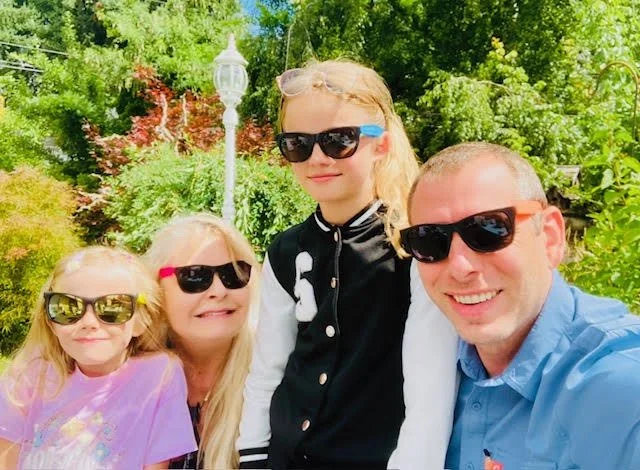
Betty's daughter, grandson, and great grand-girls — 3 more generations
We love our time on the peninsula, despite selling Betty's high-bank Marrowstone cottage in 2020. We continue to visit our American ancestral area, remembering our family's Scandinavian past.
The newest strands include Snoqualmie Pass on I-90, a ferry, the Hood Canal Bridge, and Oak Bay Road — still connecting us to our Swansonville home.
Seven Generations
From the arrival of Tom Johnson in 1886 to Betsy's great-grandmother Frederikke in 1907 and the visits of Betty's own great-grandchildren from 2013 to 2020 onward, the family spans 7 generations in Swansonville and the surrounding area. There have been three generations "before" Betty and three generations "after" Betty. She was the family's fulcrum — the keeper and maker of memories and warm, woven, cozy blankets.
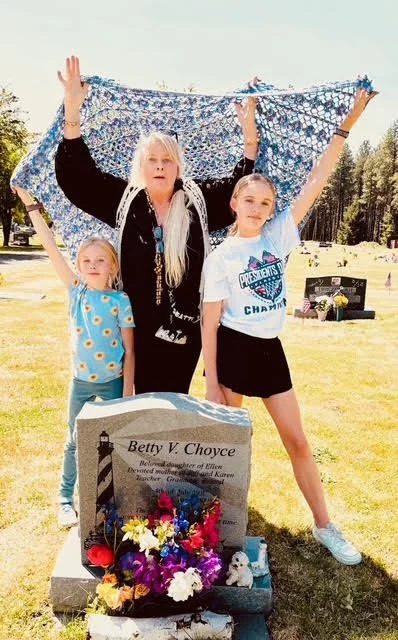
Betty's headstone in Cle Elum with her daughter Karen and Taylor's daughters. With Taylor, we represent the next 3 generations. We hold a woven blanket of all the historic strands that Betty treasured.
She crocheted this while enjoying her Marrowstone Island view, surrounded by family keepsakes, photos, memories, and memorabilia. It is this story's symbol of our family — from the past to the present and into the future of a Swansonville family, through life and remembrance.
Ellen, Betty, and Sonny are all buried in Cle Elum, though born in Swansonville. Fred's yarn held them there, firmly and forever.
Side Stories
The Altimus Family
Beyond the Klocker house on the main road, the Altimus family lived. Four children grew up there, born in the 1920s and 1930s: Evelyn, Bud, Elaine, and Juanita. Elaine was a classmate of my mother, Betty. The long walk from Ludlow school up the steep and muddy or dusty road was a hard walk for kids. Later, Bud Altimus had a small pickup and he would let the gang jump in the back for a lift. When they arrived at the steep part of the road, a few would have to jump off as the truck couldn't carry them all. Thanks, Bud, for those lifts — for my mom and your sisters. (Evelyn, the eldest, is the only one living, having just turned 100.)
My Uncle Sonny rode a bike to school, down Swansonville Road and across Oak Bay Road, lickety-split. With just one gear, he would have to push it part of the route uphill and home.
The Copper Wire Guys
During the Depression, Will Jones and a gang of locals, including a man named "Spuds," a local Bates, and a Fred W., were known to get into mischief. Their full names are lost to secrecy and time. They rowed to Port Gamble to sneak some lumber or grab a bit of copper wire. Hence, they got the nickname "The Copper Wire Guys." Times were tough in the Depression. Sometimes it was simply said, "Copper-Wire-Jones!"
Leonard Klockers and the Gate
Leonard Klockers would say that the Jones kids — my uncle and mom — would come through his gate and cut across his field to get home. They didn't want to walk the longer road home. He said they'd come in the gate but not latch it quite right, and the cows would get out. Not a big problem, as they would be found grazing the tall grasses along the ditch. Len was often in charge of rounding them up, so he was annoyed by his younger neighbor kids — though they laughed about it decades later.
"A God Forsaken Place"
My mom, Betty V. Jones, remembered an upsetting conversation at the general store one day in the mid-1930s. She was standing at the window waiting for ice cream. There was a payphone on the wall. The ferry had just left, and she heard a man on the phone say he had missed the ferry and was stuck in some "god forsaken place." Well, my mom, as a little girl, could not imagine her lively, pretty town being called such a place. She ran to her mom in the store, crying, and told her what the man had said. She was comforted to hear that Swansonville and Ludlow were a wonderful world of work, forest, farm, sea, and friends. ("That man didn't know what he was talking about," clearly!) She felt much better — but still told this story until passing in her late 70s. (In truth, with the mill's closure, the place had begun to fray and truly tear. The center of the community, the mill, was gone.)
Ellen Jones — Rosie the Riveter
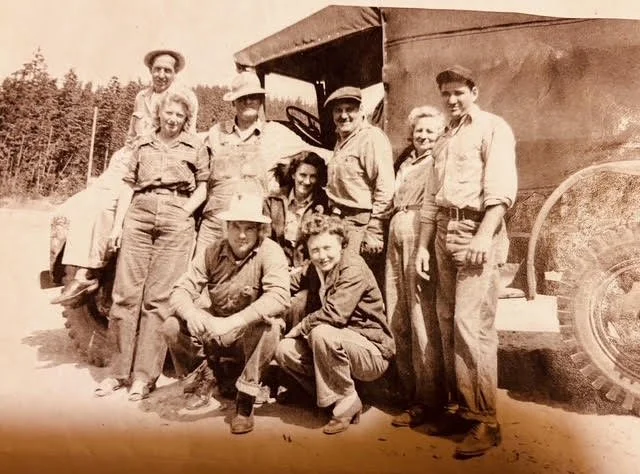
Ellen “Rosie the Riveter” Jones is pictured on the left.
Ellen Jones worked at Indian Island Naval Base as a "Rosie the Riveter" during WWII. She, Betsy, and her children were living in Swansonville. Ellen would catch a ride with one of the nearby Fultz family to the ferry at Indian Island. (There was no steel bridge yet!) Ellen operated a forklift and did other jobs needed for the war effort.
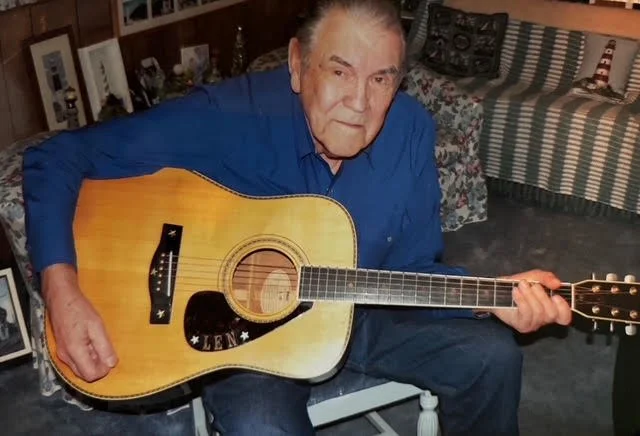
Len visiting with his scrapbook and guitar at Betty's Marrowstone cottage, 2007. He played old songs and relived local history as we shared a concert and crocheted patches of more memories.
Betty and Sonny became aware of Marrowstone Island in that time, picnicking and picking strawberries. They said that was how they both bought second homes there — from Ellen's experience at Indian Island during the war. Some Swansonville strands reached out to the islands, into the far future, 50 years forward.
Betty bought her home in 1992, and Sonny just after that. As retired siblings, they enjoyed roaming around their childhood and teen places, meeting up with old friends and visiting with Len Klockers, Betta McGuire, Ethel Johnson, and many others. They all reminisced about local history and their younger years. We listened and knitted.
Betty's 60th Reunion

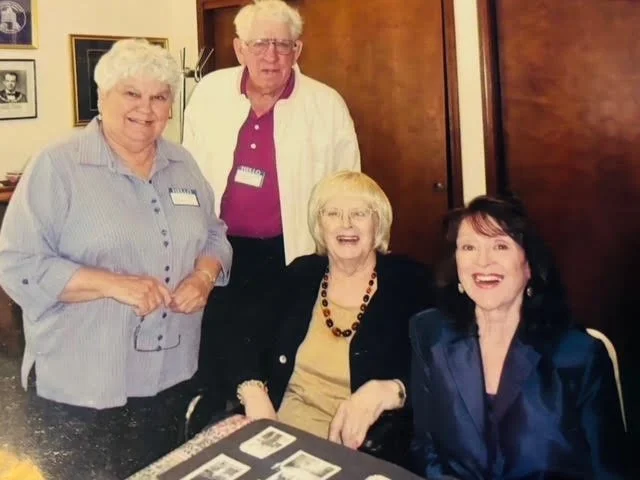
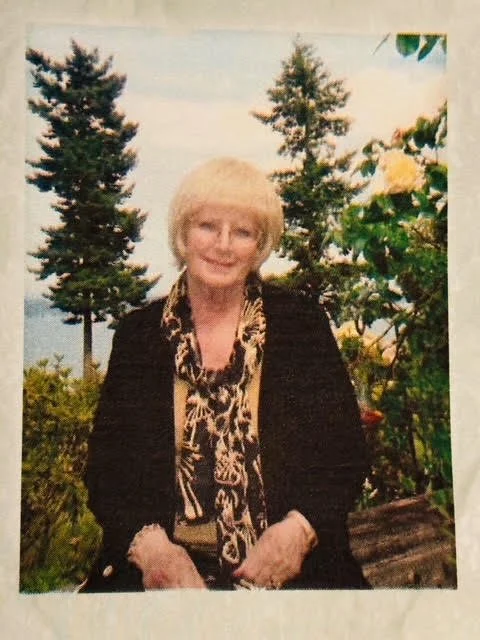
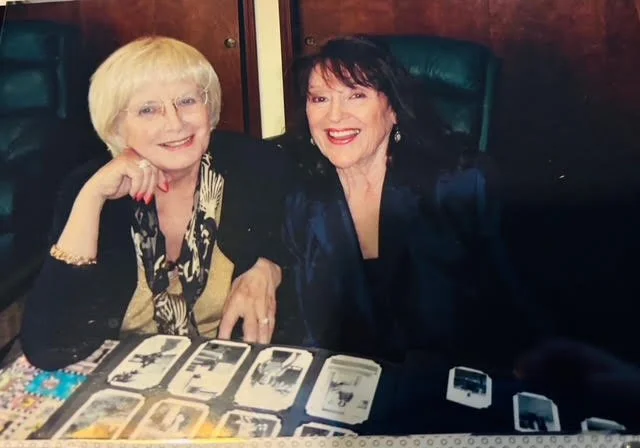
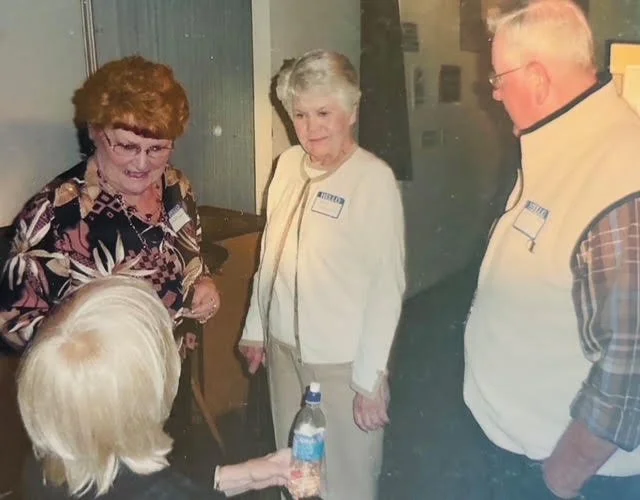
Betty attended her CHS and Ludlow alumni 60th reunion — 10 days before she would pass. She brought her childhood photo albums and yearbooks. All were thrilled to peruse the past! She had quite a collection, as the keeper of memories in photo form.
As the gals were looking at Betty's photos, suddenly, their group — in their late 70s — were overwhelmed with a buzz of excitement and delight! They were fluffing their hair, smoothing their outfits, and getting out lipstick. What was happening?
Rumor had it: Walt Klockers — "handsome" Walt Klockers — had arrived! All ladies instantly became teenage girls with crushes on "handsome" Walt approaching their table. He greeted all of them and then said, "Well, Betty Jones, how are you?" My mom became a blushing teen with just 10 days to live. What a lovely last greeting from the much-adored, older Swansonville neighbor boy.
I attended my mom's last reunion with her — and for 12 more years after. I was collecting memories from her schoolmates and still weaving.
Leonard Klockers at the Inn
Leonard Klockers and I were good friends, and we met often to talk about local history. One day, I wanted to take him down to the Inn at Port Ludlow for a snack and visit. He had an incredible old scrapbook, and we often poured over the information when my mom was still alive and after she passed.
Leonard said he couldn't go to that fancy Inn — it was for city people. I said, "Leonard, you are one of the most important people who CAN go to the Inn. You are a local, a pioneer, an original family. You have more right than anyone to go there!"
So we strolled in with his big scrapbook. I told the receptionist and waitress who he was. I let them know that hometown original royalty was in the house. He stood a bit taller and proud. Much to our surprise, the manager signed our bill, and our snack was comped for the pioneer. Gee, did he feel important.
We went one more time to see the Ludlow school photo that I donated and the Seattle newspaper article, "Disappearance of a Lumber Town."
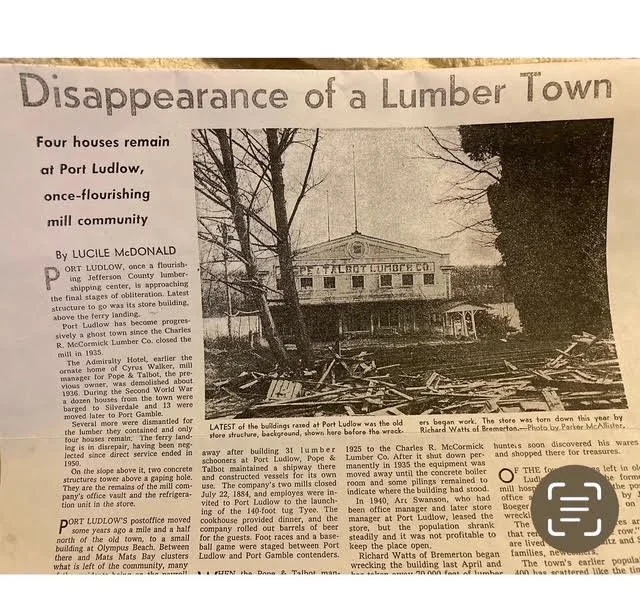
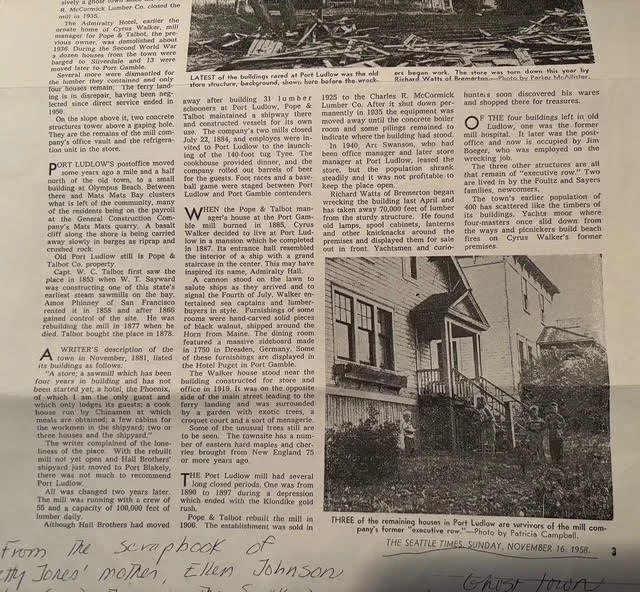
Ellen Jones Gaskell had saved this from a 1958 Seattle paper, clipped from her subscription in Cle Elum. She must have been utterly shocked and saddened to see her beloved and busy hometown chronicled as a ghost town, delivered to her CE home. Far away in time and place, the strands were really unraveling to ruin.
It represents a sad loss of a vibrant, working community for so many years. It has turned into pretty condos, lovely landscaping, and a busy golf course. All nice — but not the reality of the bustling mill, hotel, ferry, store, post office, hospital, workmen barracks, mess hall, and all the people that kept it running, from local farm areas like Swansonville to all the working lives of so many.
The Swansonville Church — Then and Now
Leonard Klockers was a pioneer settler. His family and mine were pioneers, along with the many others that made up our little community.
The church, at its center, is being restored by wonderful volunteers today. The church was the social and historical center of that place and time.
Thank you to all who are contributing to the history of our town with your volunteerism and efforts. You are preserving it and allowing us to remember it via these pages and your hard work.
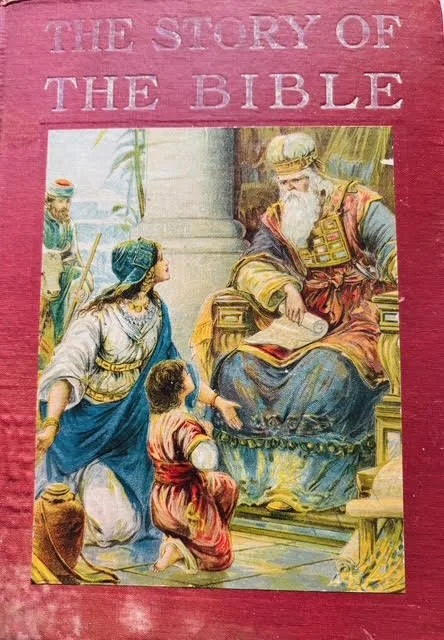
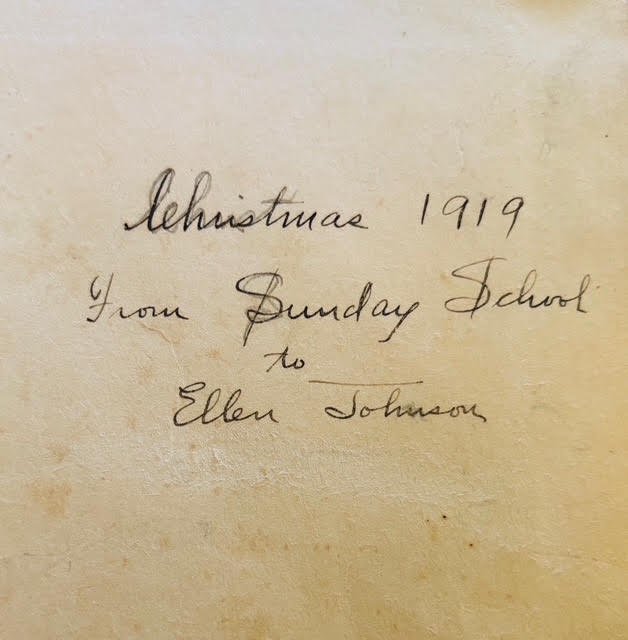
I have my Grandma Ellen's charming children's illustrated Bible. It is inscribed:
"Christmas 1919
From Sunday School
to
Ellen Johnson"
What a treasure from the very church you are now restoring. It is being given life again, bringing back memories with it, 100 years later.
Thank you, Karen
(Knutsen, Jensen, Johnson, Jones, Choyce)
Photographs courtesy of the Thomas Johnson Family Collection.

History & Timeline
Related History Spotlights
